What is my hair type?
Take one close-up photo of your hair and our model names your hair type, from 1A to 4C, in a few seconds. It runs on your device, so the photo is never uploaded.
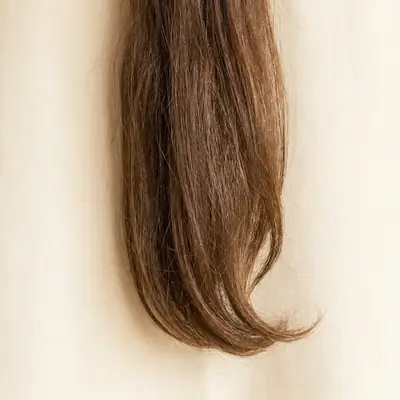
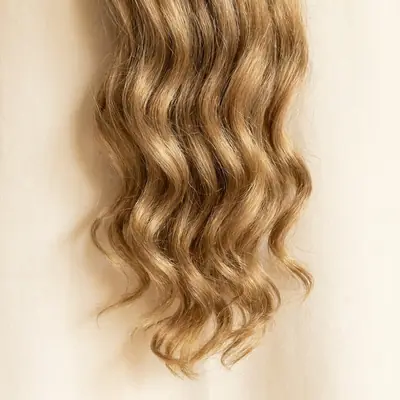
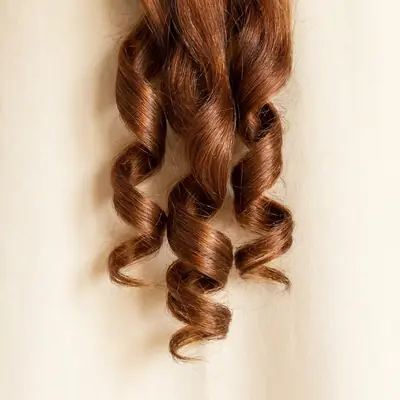
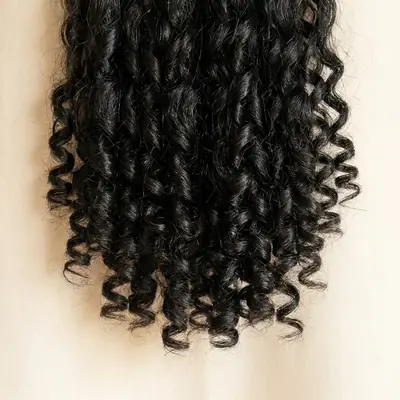

Add a close-up of your hair
or drop a photo here
- Free, no sign-up
- Photo stays on your device
- 12 types, 1A to 4C
Best photo: clean hair that dried on its own, 10 to 20 cm away, in daylight, with a finger next to a curl for scale. Your face does not need to be in it.
Your photo is analyzed inside your browser and is never sent to us or stored. The first test downloads the model once (about 25 MB).
How does the hair type test work?
You take one close-up of your hair, a model trained on thousands of hair photos reads the curl pattern, and you get your type with a confidence score. It all happens on your phone or computer.

-
1
Take a close-up of your hair
Wash your hair, skip styling products and let it dry naturally. Then photograph a section of the lengths from 10 to 20 cm away.
-
2
The model reads the pattern
It looks at how your strands bend, how wide the waves or curls are and how tightly they pack. It also checks that the photo shows enough hair to judge.
-
3
Get your type and what it needs
You see your type from 1A to 4C, how sure the model is, and the closest neighbor if you sit between two types. Your type page has the care routine.
What are the 12 hair types?
Hair types run from 1 to 4: straight, wavy, curly and coily. Each one splits into A, B and C, from looser to tighter. Tap a type to see what it looks like and how to care for it, or open the full hair type chart.


How do I take the right photo for my hair type?

Fill the frame with hair, not with your face. The test compares curl size, and that is only visible up close. A photo of your whole head shrinks each curl to a few pixels, and 3A, 3B and 3C start to look the same.
- Natural hair. Test on wash day, after the hair dries on its own. Skip gel, cream and heat, and do not brush it out.
- Close up. Hold the phone 10 to 20 cm from a section of your lengths, beside the shoulder or at the back.
- Something for scale. A fingertip next to a curl tells the model how big the curl really is.
- Good light. Daylight from a window works best. Avoid strong backlight and flash.
- Hair down. Braids, buns, twists, wigs and straightened hair hide the pattern, and the test will ask for another photo.
How accurate is the photo test?
On close-ups the model had never seen, it named the main type, straight, wavy, curly or coily, correctly 86% of the time. It landed within one subtype 95% of the time, for example 3B when the label said 3A or 3C. It picked the exact subtype 68% of the time.
That last number sounds low, but the subtypes blur into each other. Even two careful labelers often disagree on whether hair is 3A or 3B. That is why the result shows your closest neighbor when you are between two types. The method page explains how the model was trained and tested.
Why does knowing your hair type help?
Your type tells you which products and habits will work. Fine straight hair needs light products and frequent washing, while coily hair needs rich moisture, gentle detangling and much less washing. Waves and curls sit in between. Pick products for the wrong type and you get flat waves, greasy roots or dry, frizzy curls.
Type is only half the picture, though. Porosity, how well your hair holds water, changes which products soak in. You can check it with our hair porosity test, then build your routine with the curly hair routine guide.